
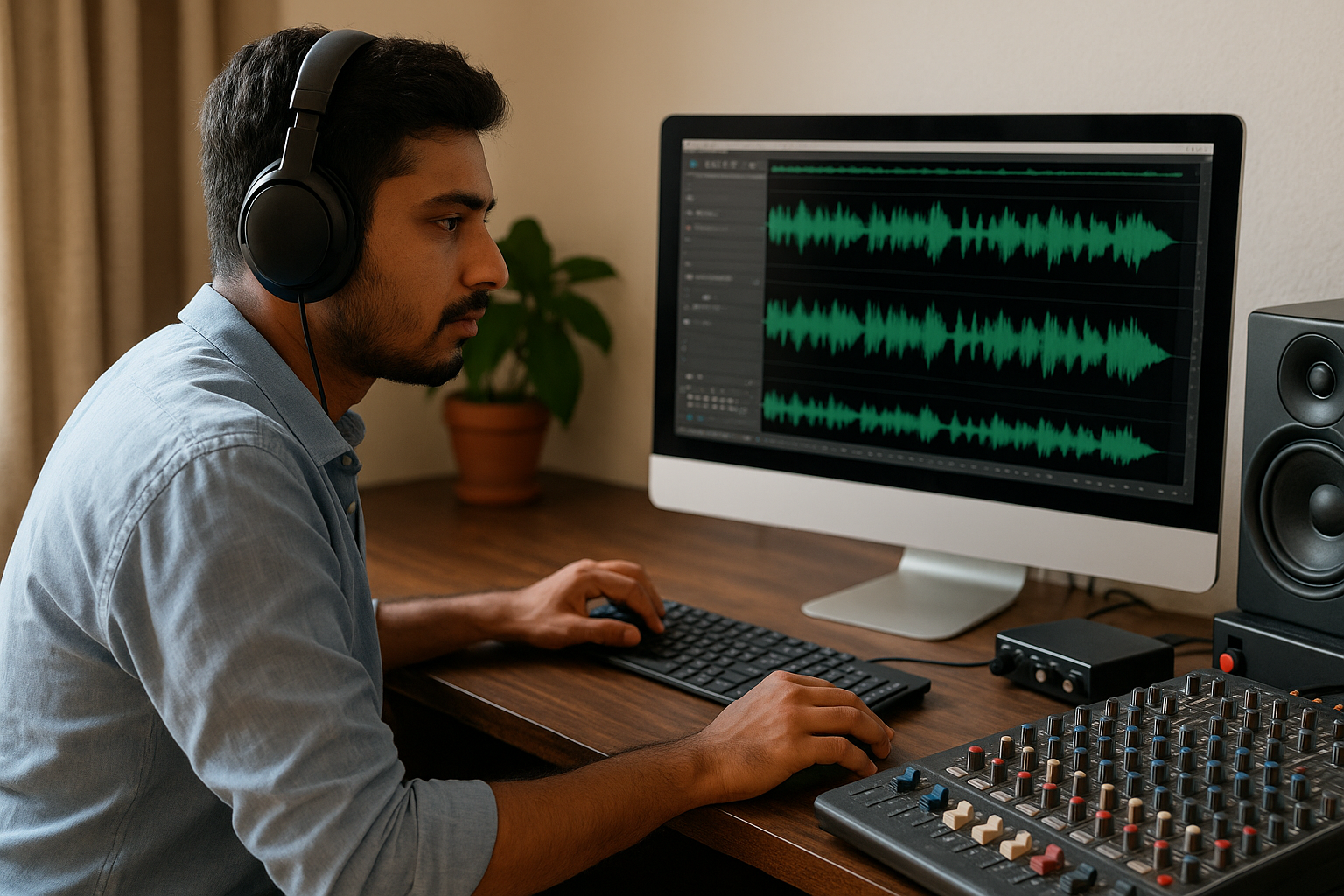
Format of Radio Advertisement Copy रेडियो विज्ञापन कॉपी का प्रारूप
Format of Radio Advertisement Copy
1. शीर्ष भाग (Heading Section)
- Client Name: (विज्ञापन देने वाली कंपनी का नाम)
- Product/Service: (उत्पाद या सेवा का नाम)
- Duration: (जैसे 30 सेकंड / 60 सेकंड)
- Language: (हिन्दी / अंग्रेज़ी / मिश्रित)
- Target Audience: (किसे लक्षित किया गया है)
- Date: (रिकॉर्डिंग की तिथि)
2. कॉपी की बॉडी (Main Script Section) Radio Advertising Copywriting रेडियो विज्ञापन लेखन
रेडियो विज्ञापन स्क्रिप्ट दो कॉलम में लिखी जाती है –
| AUDIO (जो सुनाई देगा) | INSTRUCTION (निर्देश) |
|---|---|
| (MUSIC: हल्का, खुशमिज़ाज बैकग्राउंड म्यूज़िक शुरू) | Fade in softly |
| NARRATOR (पुरुष आवाज़, ऊर्जावान): “आपका दिन शुरू हो एक ताज़गी भरे कप के साथ…!” | Slight smile in tone |
| (PAUSE – 1 सेकंड) | Short pause |
| FEMALE VOICE: “जी हाँ! अब स्वाद और ऊर्जा साथ-साथ – ‘एवरफ्रेश टी’ के साथ!” | Add sparkle in voice |
| (SFX: चाय डालने की आवाज़, कप की खनक) | Sound effect insert |
| MALE VOICE: “हर सुबह, हर पल को बनाए ख़ास!” | Energetic delivery |
| (PAUSE – 2 सेकंड) | Pause before tagline |
| TOGETHER (दोनों आवाज़ें): “एवरफ्रेश टी — स्वाद भी, सेहत भी!” | Tagline together |
| (MUSIC: धीरे-धीरे समाप्त) | Fade out slowly |
3. रेडियो कॉपी में प्रयुक्त प्रमुख चिन्ह (Marks Used in Radio Script)
| चिह्न / संकेत | अर्थ / प्रयोग |
|---|---|
| (PAUSE) | विराम का संकेत (1, 2 या 3 सेकंड का उल्लेख किया जा सकता है) |
| (MUSIC: …) | संगीत की दिशा – कौन-सा प्रकार, कब शुरू या समाप्त करना है |
| (SFX: …) | साउंड इफेक्ट – जैसे हॉर्न, घंटी, भीड़ की आवाज़ आदि |
| CAPITAL LETTERS | बोलने वाले पात्र का नाम (NARRATOR, FEMALE VOICE आदि) |
| Italic Text / कोष्ठक () | बोलने के ढंग या भाव बताने के लिए |
| Fade in / Fade out | संगीत या साउंड इफेक्ट धीरे-धीरे शुरू/खत्म करने के लिए |
| Overlap | एक संवाद खत्म होने से पहले दूसरा शुरू करना |
| (Echo) | गूंज वाला प्रभाव देने के लिए |
| [TAGLINE] | अंतिम पंक्ति या स्लोगन को विशेष रूप से दर्शाने के लिए |
4. रेडियो कॉपी लिखने के कुछ नियम (Writing Guidelines)
- शब्द सरल और स्पष्ट हों ताकि सुनने में तुरंत समझ आएँ।
- समय का ध्यान रखें (30 सेकंड में लगभग 70–75 शब्द)।
- आवाज़, संगीत और प्रभाव का संतुलन बनाए रखें।
- टैगलाइन को अलग और प्रभावशाली ढंग से लिखा जाए।
- विराम और ध्वनि संकेत सही जगह लिखे जाएँ ताकि वॉइस आर्टिस्ट समझ सके कहाँ ठहरना है।
- पहला वाक्य ध्यान आकर्षित करने वाला और अंतिम वाक्य याद रह जाने वाला होना चाहिए।
उदाहरण (Sample Radio Ad Copy)
Client: Himalaya Face Wash
Duration: 30 seconds
Language: Hindi
| AUDIO (जो सुनाई देगा) | INSTRUCTION (निर्देश) |
|---|---|
| (Soft, refreshing music begins) | Fade in |
| FEMALE VOICE: “हर दिन धूल, धूप और पसीने से चेहरा हो जाता है फीका?” | Question tone |
| (PAUSE – 1 सेकंड) | Short pause |
| MALE VOICE: “अब नहीं! क्योंकि अब है – Himalaya Neem Face Wash!“ | Energetic tone |
| (SFX: Water splash) | Insert sound effect |
| FEMALE VOICE: “नेचुरल नीम और हल्दी से बने, जो दें ताजगी और चमक!” | Smiling tone |
| (PAUSE – 2 सेकंड) | Pause before tagline |
| TOGETHER: “Himalaya Face Wash — Freshness you can feel!” | Tagline bold |
| (MUSIC ends softly) | Fade out |
Format of Radio Advertisement Copy
Format and Writing Style of a Radio Advertisement Copy
A radio advertisement copy is not just written text — it’s an audio script designed to be spoken, heard, and felt. It includes dialogue, music, sound effects, pauses, tones, and timing, all marked clearly so that voice artists, producers, and sound engineers know what to do.
1. Header Section https://www.bonnevillebayarea.com/blog/radio-advertising-terms-you-need-to-know
Every radio ad script begins with basic details:
- Client Name: (Name of the company or advertiser)
- Product/Service: (What is being promoted)
- Duration: (Usually 30 seconds or 60 seconds)
- Language: (English / Hindi / Bilingual)
- Target Audience: (Who the message is meant for)
- Date: (Date of recording or script submission)
2. Body Section (The Main Script Format)
A radio ad script is written in two columns:
- Left column: The actual audio (what listeners will hear).
- Right column: Instructions for voice artists or sound engineers.
| AUDIO (What will be heard) | INSTRUCTION (What to do) |
|---|---|
| (MUSIC: Light, cheerful background music starts) | Fade in softly |
| NARRATOR (Male, energetic): “Start your day with a refreshing cup of joy…!” | Smile in tone |
| (PAUSE – 1 second) | Short pause |
| FEMALE VOICE: “Yes! Taste and energy together — with Everfresh Tea!” | Bright and lively tone |
| (SFX: Tea pouring sound, cup clinking) | Add sound effect |
| MALE VOICE: “Make every morning special!” | Energetic delivery |
| (PAUSE – 2 seconds) | Short break before tagline |
| TOGETHER (Both voices): “Everfresh Tea — Taste and Health in every sip!” | Tagline together |
| 🎵 (MUSIC fades out slowly) | Fade out |
3. Common Marks and Symbols Used in a Radio Script
| Mark / Symbol | Meaning / Use |
|---|---|
| (PAUSE) | Indicates a pause — duration may be written as 1, 2, or 3 seconds. |
| (MUSIC: …) | Direction for background music — when and how it plays. |
| (SFX: …) | Sound effects like horn, bell, crowd noise, splash, etc. |
| CAPITAL LETTERS | Used for the speaker’s name (NARRATOR, FEMALE VOICE, etc.) |
| Italics / (in brackets) | Tells how the line should be spoken (emotion, tone). |
| Fade in / Fade out | Music or sound begins or ends gradually. |
| Overlap | Next dialogue starts before the previous one finishes. |
| (Echo) | Used when an echo or reverberation effect is needed. |
| [TAGLINE] | Highlights the final slogan or punch line. |
4. Guidelines for Writing a Good Radio Ad Copy
- Use simple, clear, and short sentences. The listener must understand instantly.
- Keep time in mind: A 30-second ad usually fits about 70–75 words.
- Balance voice, music, and effects. None should dominate unnecessarily.
- Tagline should be catchy and easy to remember.
- Mark pauses and sound effects properly so the voice artist knows where to stop or emote.
- The first line should grab attention; the last line should stick in the memory.
- Avoid long descriptions — radio is about the “feel,” not just the information.
5. Sample Radio Advertisement Copy
Client: Himalaya Face Wash
Duration: 30 seconds
Language: English
| AUDIO (What will be heard) | INSTRUCTION (What to do) |
|---|---|
| (Soft, refreshing background music begins) | Fade in gently |
| FEMALE VOICE: “Does your face lose its glow because of dust and sunlight?” | Question tone |
| (PAUSE – 1 second) | Short pause |
| MALE VOICE: “Not anymore! Presenting Himalaya Neem Face Wash!” | Energetic delivery |
| (SFX: Splash of water) | Add sound effect |
| FEMALE VOICE: “Made with natural Neem and Turmeric — it refreshes and brightens instantly!” | Warm tone |
| (PAUSE – 2 seconds) | Pause before tagline |
| TOGETHER: “Himalaya Face Wash — Freshness you can feel!” | Tagline in both voices |
| (Music fades out slowly) | Fade out |
6. Understanding Pauses and Timing
- Short Pause (1 second): Used for emphasis or natural breathing.
- Medium Pause (2 seconds): Used before taglines or key information.
- Long Pause (3 seconds): Adds dramatic effect or separates scenes.
For example:
“Are you tired of dull skin? (Pause 2 sec) Try Himalaya Face Wash — and feel the freshness!”
7. Tone and Expression Marks
| Term | Meaning | Example Instruction |
|---|---|---|
| Smiling tone | Slightly cheerful and pleasant voice | (Smile in tone) |
| Energetic tone | Fast, confident, full of enthusiasm | (Energetic delivery) |
| Soft tone | Calm, emotional, or romantic scene | (Soft tone, slow pace) |
| Question tone | When asking a question to the listener | (Raise pitch slightly) |
| Dramatic pause | Create suspense before the next line | (Pause – 3 seconds) |
8. Summary
A good radio advertisement copy is audio storytelling — it paints a picture through words, pauses, and sounds.
To write effectively:
- Hear it as you write it.
- Visualize what the listener will imagine.
- Give clear instructions for voice, sound, and mood.
In short:
“A well-written radio ad is not read — it’s performed.”

